Luxury home decor — Growth
A 12-month target hit in 3 months: $100K.
FYR was entering a saturated category from zero with luxury candles and fire objects, and had to reach a high-end buyer. We built the positioning, the interface and the creative production as one system. The 12-month revenue target was passed in the first 3 months.
- Duration
- 4 months
- Disciplines
- Brand strategy & marketing advisory · UI/UX design · Performance marketing

Measured results
- Revenue
- $0,000
- In the first 3 months; the full 12-month target
- ROAS
- 0×
- Held above; in the luxury decor category
- Orders
- 0,000+
- Across the 4-month engagement
01 — Challenge
- The brand started from zero: no awareness, no customer data, no sales history.
- Luxury home decor is a saturated category; high-end buyers purchase on perception, not price.
- If product photography and interface quality fall below the luxury standard, the price positioning collapses.
02 — Approach
- 01We positioned the brand at the high end and defined the target audience's purchase moment and ritual.
- 02The interface was built luxurious, minimal and fast, with software work that simplified the purchase flow.
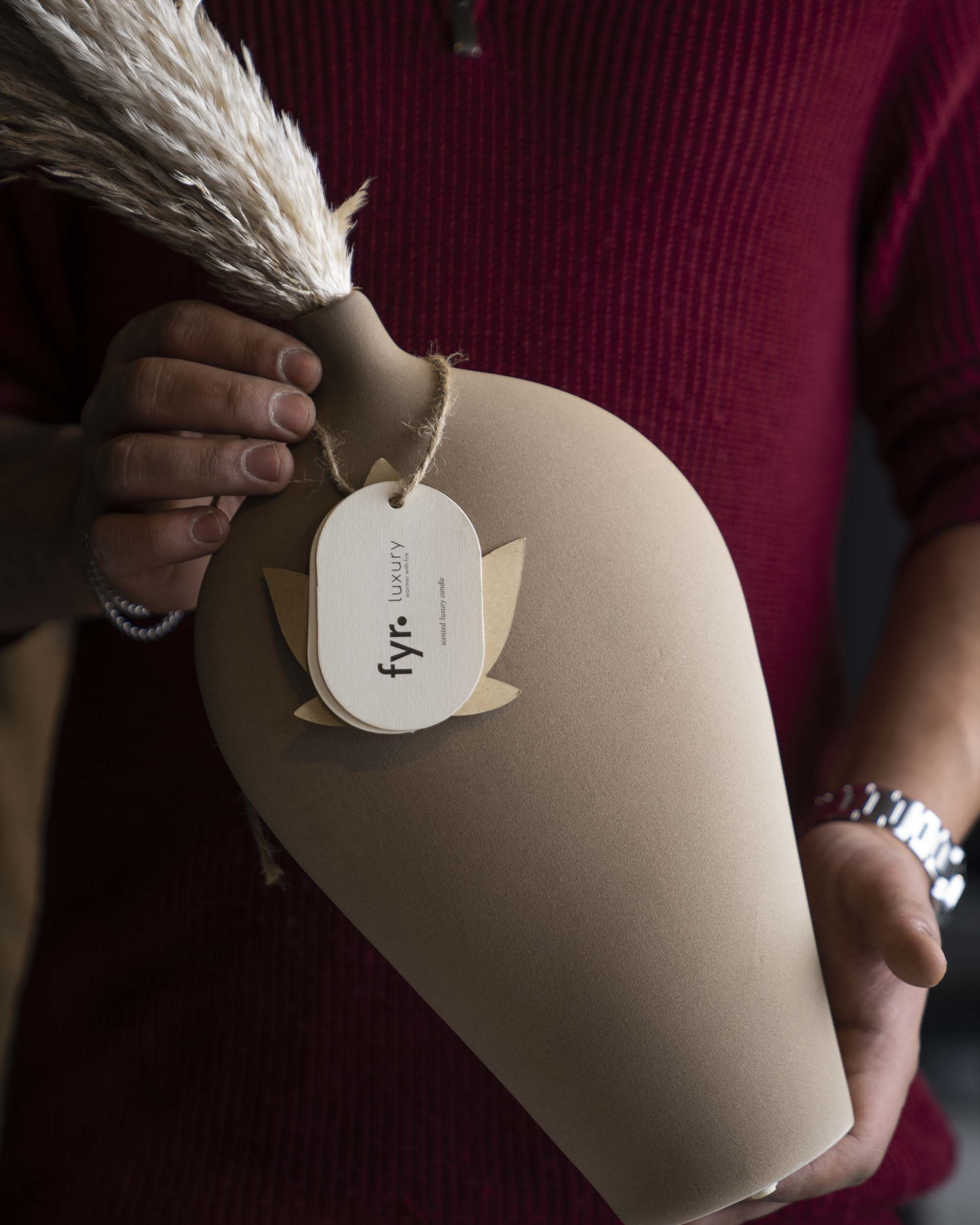
- 03Product and interior shoots were planned around a fixed color palette — every frame tells the same brand world.
- 04Campaigns ran on a test-and-learn loop, shifting budget to the winning creative and audience.
03 — Outcome
- The 12-month revenue target was passed in the first 3 months; revenue exceeded $100K.
- Return on ad spend held above 20×.
- Over 4 months the brand shipped more than 3,000 orders and became a name its audience heard from people they know.
Field record


We built the brand from zero and passed our full-year target in the first season. Now customers arrive because someone they know told them about us.
Frequently asked questions
Was the 12-month target really passed in 3 months?
The target was passed in the first three months: revenue exceeded $100,000, which was the brand's entire 12-month goal. The FYR engagement ran four months in total, and more than 3,000 orders shipped in that time. The two figures measure different windows and should not be divided into one another — revenue covers the first three months, order count the full four.
What was the first step for a brand starting from zero?
The first step was positioning. FYR had no awareness, no customer data and no sales history, so the brand's place at the high end and the audience's purchase moment were defined first. Interface, photography and campaign decisions all followed from that definition. For a brand starting from zero, every decision taken before the position is written gets reversed later.
How did the brand stand out in a saturated category?
The separation was built on perception. In luxury home decor the high-end buyer purchases on perception rather than price, and product photography and interface quality carry that perception. Shoots were planned around a fixed colour palette, so product, interior and packaging frames all told the same brand world and the brand became recognisable through one visual signature.
How was return on ad spend held above 20×?
The return was held at that level through a test-and-learn loop. Campaigns were measured continuously and budget shifted to the winning creative and audience, while losing combinations were closed quickly. The ratio stayed above 20× across the engagement. High basket value widened the margin too: in the luxury segment a single sale produces more revenue at the same cost per click.
Why was creative production so central?
Creative was central because price positioning depends directly on visual quality. If product photography and the interface fall below the luxury standard, the price becomes indefensible and the positioning collapses. At FYR, product and interior shoots were produced in a single visual language down to packaging and tag detail, with every frame carrying the same decisions on light, texture and palette.
What was done on the interface?
The interface was built luxurious, plain and fast, with software work that shortened the purchase flow. The goal was to reduce the distance between seeing the product and reaching the payment step. In the luxury segment every extra step produces hesitation, because the moment a buyer starts questioning the price the intent weakens. Speed was tracked as its own metric for the same reason.
Over what period did the 3,000 orders ship?
The order count covers the full four-month engagement, while the revenue figure is the total for the first three months. The two measure different windows, so dividing one by the other does not give an average basket. Order volume is reported separately because revenue alone does not show volume: in a high-priced category the same revenue can come from very different order counts.
How was budget distributed across campaigns?
Distribution followed results. Each creative and audience combination was measured separately, losers were closed and spend moved to the winners. For a brand starting from zero, that loop is how the right message is found by measurement rather than assumption. With no historical customer data, the first weeks were deliberately treated as learning budget, and scale followed once a winner emerged.
Would the same approach work for another luxury brand?
The approach works when the product and its packaging can carry the frame. At FYR the job was making an existing quality visible; where the product itself does not hold a luxury read, creative cannot compensate. The second condition is price discipline: a brand that grows on discounts cannot hold a high-end position, because discounting pulls perception back down to price.
Which services does this work fall under?
The work falls under brand strategy and marketing advisory, UI/UX design and performance marketing. Photo and video production ran inside the same project as the execution arm of brand strategy. The three services moved on one schedule, because the positioning decision set art direction, interface structure and campaign goals at the same time.
Where would a similar launch start?
The starting point is positioning and a definition of the purchase moment. Until who buys, at what moment and for what reason is written down, neither art direction nor campaign goals can be set. The second step is fixing the visual language at the level of palette and texture; an unfixed palette forces the brand to introduce itself again with every campaign.
Related cases
View all
 $1.5M — Revenue
$1.5M revenue in 6 days, e-commerce.
E-commerce & retail

 12× — Sales
12× sales in 3 months, sportswear.
Sportswear e-commerce

 Top 3 — Google ranking
Top 3 for bionic prosthetics, 10 new patients a month.
Medical devices & healthcare
Where do we start?
Three entry doors at three speeds. Pick the one that fits.