E-commerce & retail — Growth
$1.5M revenue in 6 days, e-commerce.
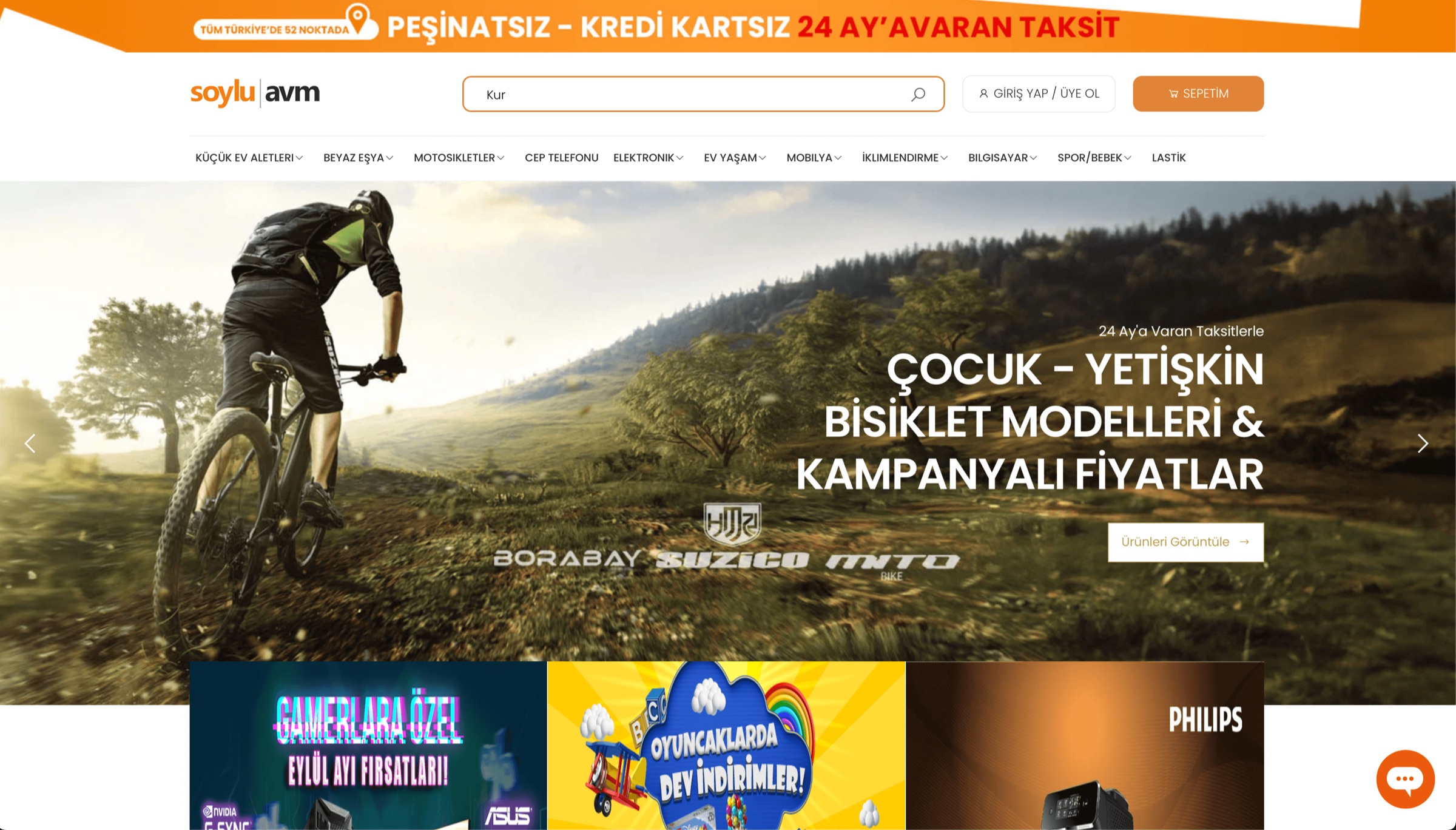
SOYLU AVM couldn't measure its traffic, and sales were stuck in a single category. We rebuilt the measurement stack first, then launched the campaign. The first 6 days recorded $1.5M in revenue.

- Period
- May – July 2024
- Duration
- 10 weeks
- Disciplines
- Performance marketing
Measured results
- Revenue
- $0.0M
- First 6 days of the campaign
- Return on ad spend
- ~0:1000
- First 30 days, on ad spend basis
- Total traffic
- +0%
- Organic + paid, after segmentation
- Organic traffic
- +0%
- Through the content marketing programme
01 — Challenge
- Pixel setups were incomplete; neither traffic sources nor conversion paths could be tracked.
- ROI reports were misleading; ad budget was spent without knowing which product sold.
- Sales were concentrated in one product category; seasonal demand sat unanswered in stock.
02 — Approach
- 01All pixel and conversion tracking rebuilt from scratch; traffic sources segmented.
- 02Ad copy rewritten; AI-assisted ad sets tracking seasonal demand went live.
- 03Organic channel grown through content marketing; the campaign plan tied to category diversification.
03 — Outcome
- Total revenue reached $1.5M on day 6 of the campaign.
- Return on ad spend measured at roughly 1:1000 after the first 30 days.
- Total traffic grew 150%, organic traffic 70%; overstocked products sold through category campaigns.
Frequently asked questions
How long did the $1.5M in revenue take?
Revenue reached $1.5M on day six of the campaign. The SOYLU AVM engagement ran ten weeks in total between May and July 2024, and the first part of those ten weeks went to the measurement stack. The figure is the total for the first six days after launch, while return on ad spend was measured separately over the first 30 days.
What was done before the campaign launched?
The measurement stack was rebuilt from scratch before any campaign ran. At SOYLU AVM the pixel setups were incomplete, so neither traffic sources nor conversion paths could be tracked. No ad set opened until pixels and conversion tracking were rebuilt and traffic sources segmented. Ad copy was rewritten in the same preparation window, so the campaign started on ground that could be measured.
Why did measurement come before the campaign?
Faulty measurement was making the spend invisible. At SOYLU AVM the ROI reports were misleading and ad budget went out without showing which product sold. Once data flowed correctly, the winning ad set could be read from day one, and decisions to pause or shift budget came from records rather than guesses. Reversed, the six-day revenue figure could not have been explained.
How was the 1:1000 return on ad spend measured?
The ratio was measured over the first 30 days on an ad spend basis. It compares the ad budget spent in that window with the revenue recorded in the same window; product cost, logistics and operations are not included in it. The frame was deliberately kept narrow, because ad spend was the variable that directly drove campaign decisions.
Why did organic traffic grow 70%?
The organic lift came from the content marketing programme. Content production ran alongside the ad campaign and built a base that sits outside paid traffic. Total traffic grew 150%, and part of that growth arrived through the organic channel. The distinction matters: paid traffic drops when the budget stops, while an organic base holds as long as the published content stands.
How was the category mix widened when sales sat in one category?
Diversification came from tying the campaign plan directly to a category goal. At SOYLU AVM, ad sets tracking seasonal demand were pointed at the product groups sitting unsold in stock. Overstock moved through category campaigns and revenue stopped depending on a single product group. Segmentation was decisive here: which audience responded to which category had become measurable.
Where was AI used in this project?
AI was used to tune ad sets to seasonal demand. The assisted sets tracked demand movement and fed the decision on which category to weight and when. Ad copy itself was rewritten by hand; no machine-written copy was used in this case. The split was deliberate: when to show something to whom is a data job, while what to say remains a brand decision.
Which service does this work fall under?
The work falls under performance marketing. Measurement setup, campaign management, the content programme and the category plan were parts of one engagement, and the disciplines listed separately in the credits sit under that service. There is no separate software line: the existing e-commerce stack stayed in place while the measurement layer and the campaign side were rebuilt.
Would the same approach work for another e-commerce brand?
The approach works where measurement is broken and the catalogue has depth. Both conditions held at SOYLU AVM: tracking was misconfigured and whole categories sat waiting in stock. On a narrow catalogue dependent on a single category, the same lever does not pull at this scale. Where measurement is already sound the gain is smaller too, and priority shifts to the conversion side.
Where would a similar project start?
The starting point is a measurement audit. Pixel setup, conversion events and whether traffic sources separate correctly all get checked, and no budget conversation happens before that picture exists. The audit output also shows which lever to pull first. The second step is the catalogue: which categories sit waiting in stock and which ones answer seasonal demand.
Related cases
View all
 12× — Sales
12× sales in 3 months, sportswear.
Sportswear e-commerce
 Top 3 — Google ranking
Top 3 for bionic prosthetics, 10 new patients a month.
Medical devices & healthcare

 $100,000 — Revenue
A 12-month target hit in 3 months: $100K.
Luxury home decor
Where do we start?
Three entry doors at three speeds. Pick the one that fits.